

Enterprise software is undergoing a fundamental transformation. Employees no longer want applications that simply respond to commands they expect systems that anticipate needs, automate routine work, and deliver relevant information before they even ask for it.
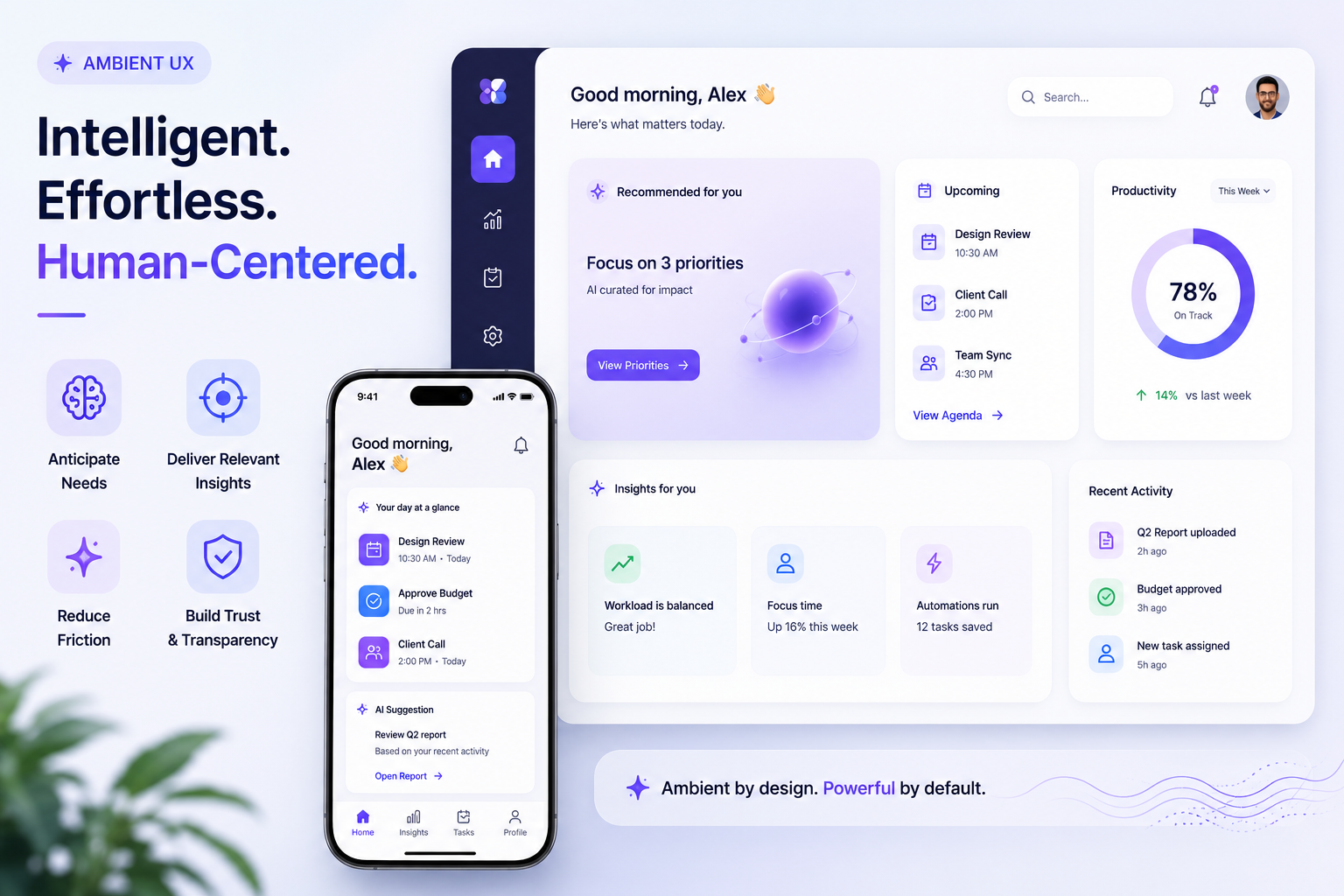
This emerging design philosophy is known as Ambient UX. Instead of requiring constant interaction, software quietly works in the background, using artificial intelligence and contextual data to create seamless digital experiences.
For enterprise organizations investing in AI and digital transformation, Ambient UX is becoming a key driver of productivity and user satisfaction.
What Is Ambient UX?
Ambient UX focuses on minimizing user effort by making digital experiences proactive rather than reactive.
Instead of requiring users to navigate multiple screens or perform repetitive actions, applications intelligently surface the right information at the right time.
Examples include:
- AI-generated meeting summaries
- Context-aware dashboards
- Predictive recommendations
- Intelligent workflow automation
- Personalized notifications
- Smart search experiences
The goal is to let employees focus on business outcomes rather than navigating software.
Why Enterprise Organizations Are Adopting It
As enterprise ecosystems grow more complex, employees spend increasing amounts of time switching between applications, searching for information, and repeating administrative tasks.
Ambient UX helps organizations:
- Improve workforce productivity
- Reduce digital friction
- Increase software adoption
- Simplify onboarding
- Enhance customer experiences
- Accelerate business decisions
Small reductions in effort can create significant gains at enterprise scale.
AI Makes Ambient Experiences Possible
Generative AI and predictive analytics enable software to understand user intent, previous activity, and business priorities.
Rather than displaying generic dashboards, applications can prioritize relevant information, recommend next actions, and automate repetitive workflows without interrupting users.
This creates digital experiences that feel more intuitive while reducing cognitive load.
Responsible Design Still Matters
Automation should always be transparent.
Enterprise UX teams should ensure users understand:
- Why recommendations appear
- Which data AI uses
- How automated actions can be reviewed
- When users remain in control
Responsible AI design builds confidence while supporting governance and compliance.
Designing for Long-Term Scalability
Ambient UX should be supported by flexible design systems that work consistently across web applications, mobile platforms, AI assistants, and customer-facing products.
Scalable patterns make it easier for organizations to introduce new AI capabilities without sacrificing usability or consistency.
Industry Perspective
Across enterprise product engineering, organizations are increasingly integrating UX research, AI engineering, cloud-native platforms, and product strategy into unified delivery models. Companies such as GeekyAnts have publicly demonstrated this broader industry trend through enterprise solutions where intelligent user experiences and scalable engineering practices evolve together.
Conclusion
Enterprise software is moving toward experiences that require less attention while delivering greater value.
Organizations that embrace Ambient UX today will create digital products that employees learn faster, trust more, and rely on every day making intelligent, effortless experiences a lasting competitive advantage.