


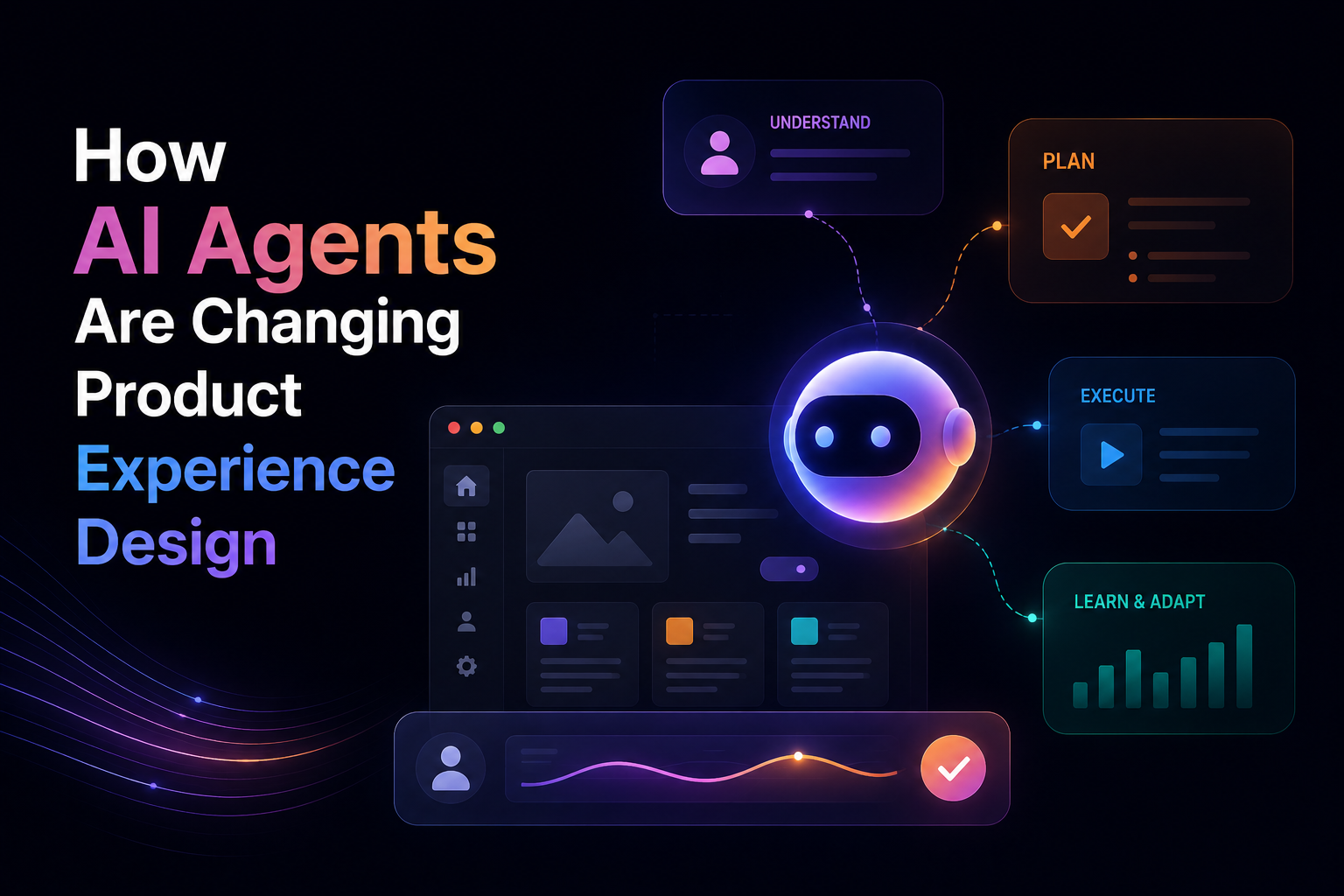
For years, product experience design focused on improving usability through cleaner interfaces, better navigation systems, and faster workflows. The goal was simple: help users complete tasks with less friction.
But in 2026, digital products are entering a completely different phase.
Users no longer expect products to simply respond to actions. They expect products to understand intent, predict needs, automate repetitive work, and adapt in real time.
This shift is why AI agents are becoming one of the biggest forces changing product experience design today.
The conversation around UX is no longer only about layouts, buttons, or visual consistency. Product teams are now designing systems that actively participate in the user journey instead of passively waiting for interaction.
That changes everything about how digital products are built.
Static User Experiences Are Becoming Less Effective
One of the biggest problems businesses face today is user fatigue.
Modern digital products are overloaded with menus, dashboards, notifications, workflows, and feature layers. While products continue becoming more powerful, they are also becoming harder to use.
Users increasingly feel overwhelmed.
This issue is especially visible in SaaS platforms, enterprise systems, fintech apps, healthcare dashboards, and productivity tools where operational complexity keeps growing every year.
Traditional UX design methods struggle to solve this problem because static interfaces treat every user the same way.
AI agents are changing that model completely.
Instead of relying on fixed workflows, AI-driven product experiences adapt dynamically based on user behavior, context, priorities, and historical activity.
The product experience becomes personalized automatically.
For example, project management platforms can prioritize tasks based on urgency patterns. Ecommerce products can reorganize interfaces around browsing behavior. Enterprise dashboards can surface operational risks before users search for them manually.
This shift from “interactive products” to “intelligent products” is redefining product design strategy.
Users no longer want to navigate complexity themselves.
They want products that reduce complexity for them.
Companies such as Notion AI, Figma AI, and Adobe Firefly are already showing how AI-assisted experiences can simplify creative, collaborative, and operational workflows significantly.
AI Agents Are Turning Interfaces Into Assistive Systems
One of the biggest changes AI agents bring to product experience design is the shift from interface-based interaction toward assistive interaction.
Historically, users had to learn how a product worked.
Now products are starting to learn how users work.
That difference is shaping the future of UX.
AI agents can analyze user intent, detect workflow patterns, process natural language, and proactively recommend actions. Instead of forcing users through multiple interface layers, products increasingly simplify interactions through contextual assistance.
This is why conversational UX is growing rapidly across modern digital products.
Users can now interact with platforms using prompts, voice commands, or natural language instructions instead of navigating through complex menus manually.
For example:
- “Summarize this report.”
- “Generate a project update.”
- “Find delayed approvals.”
- “Recommend the next action.”
The AI agent handles the operational complexity behind the scenes.
This reduces cognitive load significantly.
For enterprise users managing large-scale workflows daily, this type of AI-assisted design can improve productivity far more effectively than traditional interface optimization alone.
But the most successful AI experiences are often subtle.
Users do not necessarily want products constantly interrupting workflows with visible AI features. They prefer systems that quietly simplify tasks, automate repetitive actions, and surface relevant information at the right time.
This is why predictive UX is becoming one of the fastest-growing trends in product experience design.
Predictive and Context-Aware UX Is Becoming the New Standard
AI agents are enabling products to move from reactive experiences to predictive experiences.
Traditional products wait for user input.
AI-driven products anticipate user needs before interaction happens.
This changes how product teams think about onboarding, navigation, search systems, recommendations, notifications, and workflow management.
For example, customer support platforms can identify escalation risks automatically. CRM systems can predict churn behavior. Ecommerce platforms can personalize recommendations dynamically based on browsing intent. Productivity tools can summarize meetings and prioritize follow-ups automatically.
These predictive systems reduce operational friction dramatically.
However, many businesses are still implementing AI incorrectly.
One common mistake is over-automation.
Some products add excessive AI layers that create interruptions, irrelevant suggestions, or workflow confusion. Instead of improving usability, these experiences overwhelm users further.
This is becoming a major challenge for product teams.
Good AI UX is not about adding more intelligence everywhere.
It is about knowing where intelligence creates meaningful value.
Businesses are increasingly realizing that users prefer AI systems that feel helpful rather than intrusive.
That balance between automation and usability is becoming one of the most important design challenges in modern product development.
Companies like GeekyAnts, IDEO, and Thoughtworks are actively exploring AI-first product experience models where design systems evolve around human workflows instead of purely interface structures.
The Future of Product Design Will Be Less Visible
The next generation of digital products may not rely heavily on traditional interfaces at all.
As AI agents become more context-aware, products will increasingly shift toward invisible UX models where automation, prediction, and assistance happen naturally within workflows.
Users may spend less time navigating apps and more time communicating intent directly.
This transition is already influencing enterprise software, mobile applications, ecommerce systems, productivity tools, and collaborative platforms.
The most competitive products in the next few years will likely not be the ones with the most features.
They will be the products that reduce decision fatigue, operational friction, and unnecessary interaction steps most effectively.
That is why AI agents are changing product experience design at such a fundamental level.
They are moving products away from static interfaces and toward adaptive digital experiences that behave more like intelligent collaborators than traditional software tools.