


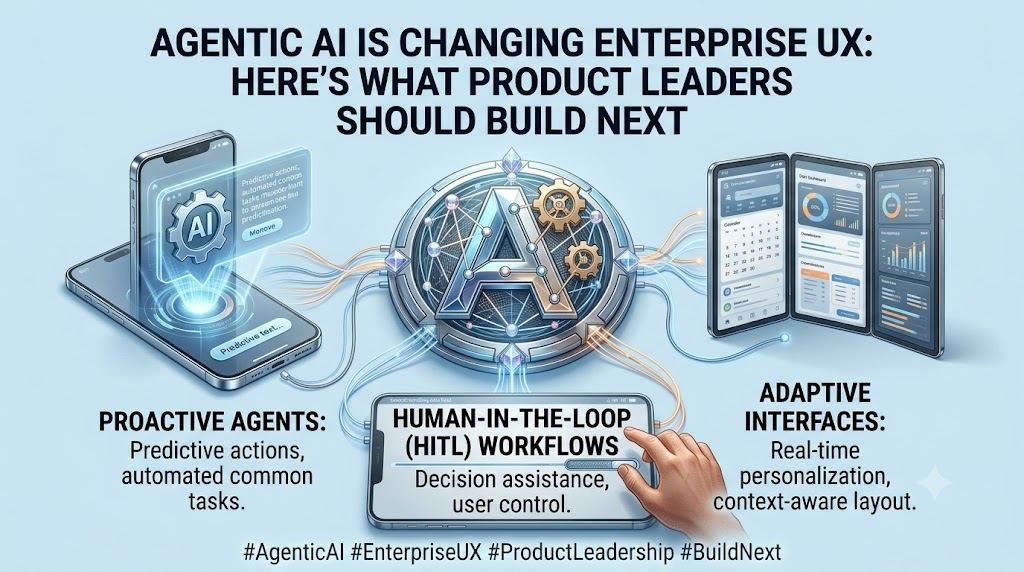
Enterprise software is entering a new phase. While generative AI introduced intelligent assistants and conversational interfaces, the next evolution is Agentic AI AI systems capable of planning, reasoning, and completing multi-step tasks with minimal human intervention.
For organizations investing in digital transformation, this shift represents more than a technological upgrade. It requires rethinking how enterprise applications are designed, how employees interact with software, and how businesses deliver digital experiences at scale.
User experience is becoming the foundation that determines whether Agentic AI succeeds or becomes another underused feature.
What Is Agentic AI?
Unlike traditional AI features that respond to individual prompts, Agentic AI can analyze goals, make decisions, coordinate workflows, and complete actions across multiple systems.
Examples include:
- Scheduling meetings automatically
- Preparing reports using data from multiple platforms
- Assisting customer support agents with complete case histories
- Managing procurement workflows
- Recommending operational improvements based on real-time analytics
Instead of acting as a tool, Agentic AI behaves more like a collaborative digital teammate.
Why UX Becomes Even More Important
As AI becomes more autonomous, users need confidence that systems are acting correctly.
Enterprise UX must now answer questions such as:
- Why did the AI make this decision?
- What information was used?
- Can users edit or reject recommendations?
- How are automated actions monitored?
- What happens if AI makes an error?
Transparent interfaces help organizations build trust while reducing resistance to AI adoption.
Designing for Human-AI Collaboration
The best enterprise products will not replace employees—they will augment them.
Human-centered interfaces should provide:
- Clear AI explanations
- Easy approval workflows
- Context-aware recommendations
- Real-time collaboration
- Personalized dashboards
- Consistent experiences across devices
Rather than hiding complexity, great UX makes advanced AI understandable and manageable.
Enterprise Design Systems Need to Evolve
Modern design systems can no longer focus only on colors, typography, and reusable components.
AI-powered applications require standardized patterns for:
- AI prompts
- Recommendation cards
- Confidence indicators
- Workflow approvals
- Conversational interfaces
- AI notifications
- Explainability panels
These patterns create consistency across enterprise products while helping users interact with AI more naturally.
Measuring UX Success in the AI Era
Organizations increasingly evaluate AI-powered experiences through measurable business outcomes.
Important metrics include:
- AI feature adoption
- Employee productivity
- Task completion speed
- Customer satisfaction
- Workflow automation rates
- Support ticket reduction
- Digital adoption
- User trust
These indicators demonstrate whether AI is creating genuine business value rather than simply adding functionality.
Industry Perspective
Across enterprise product engineering, companies are moving toward integrated teams where UX, AI engineering, cloud infrastructure, and product strategy evolve together. Organizations such as GeekyAnts have publicly shared work across healthcare, fintech, retail, and enterprise SaaS that reflects this broader industry direction of designing AI-powered products with usability, scalability, and business outcomes in mind.
Conclusion
Agentic AI is changing how enterprise software is built, but intelligent technology alone will not define the next generation of successful products.
Organizations that prioritize transparent design, human-centered experiences, and responsible AI will create digital platforms that employees trust, customers value, and businesses can confidently scale.
The future of enterprise UX isn’t simply about better interfaces it’s about designing meaningful partnerships between people and intelligent systems.