

Artificial intelligence is transforming the way enterprises build digital products, but technology alone doesn’t guarantee success. As organizations integrate AI into customer experiences and internal workflows, the quality of user experience has become a defining factor in adoption, productivity, and business outcomes.
For enterprise leaders, designing AI-powered products is no longer just about adding intelligent features. It’s about ensuring those features are intuitive, transparent, and aligned with how people actually work.
The Growing Need for Human-Centered AI
Employees and customers expect software that feels natural to use. Whether interacting with an AI assistant, receiving automated recommendations, or completing complex workflows, users want experiences that reduce effort rather than introduce new complexity.
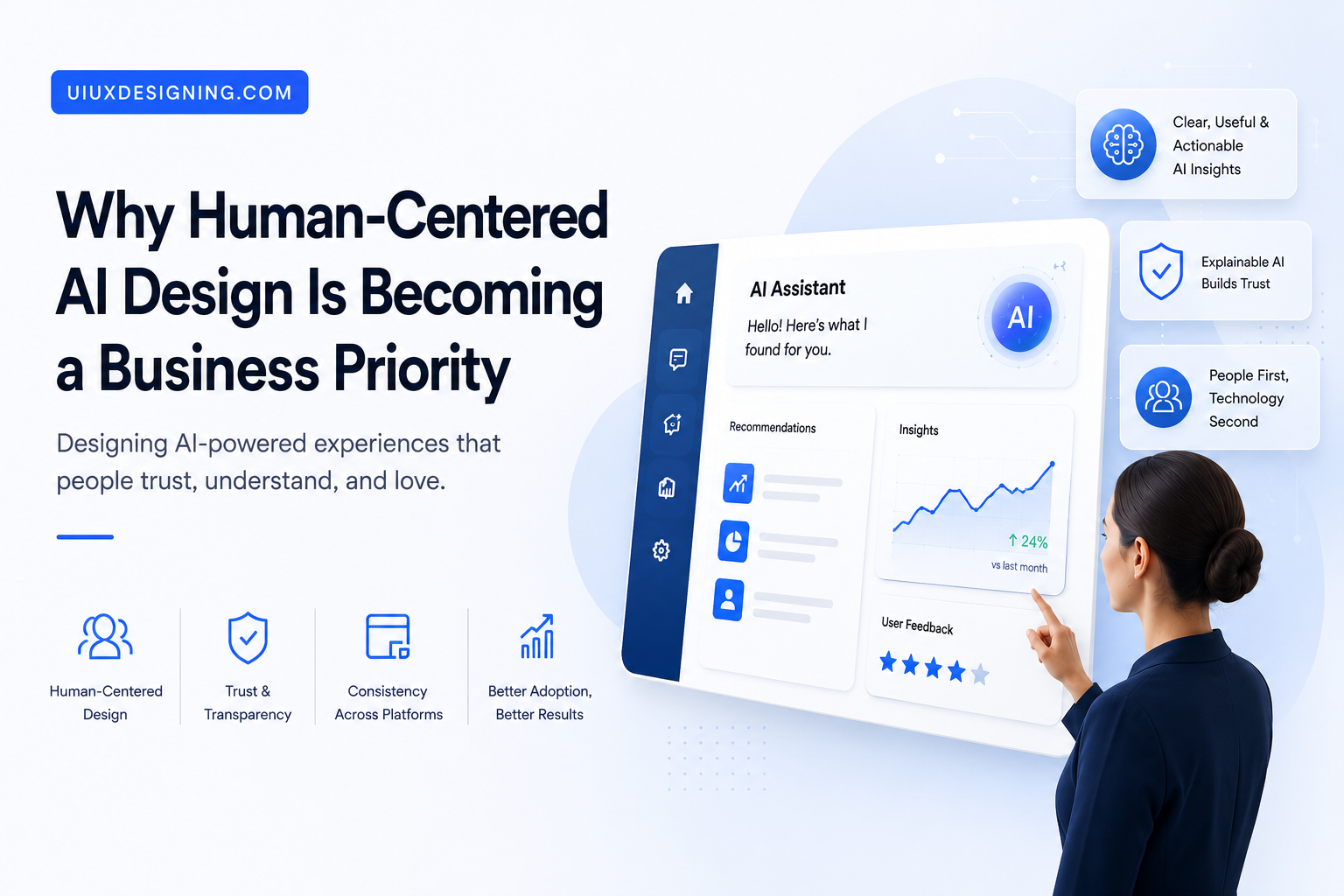
Human-centered AI focuses on creating products that support users instead of overwhelming them. This means designing interfaces that explain AI decisions, provide clear feedback, and allow users to remain in control.
Why UX Matters in Enterprise AI
Enterprise software often serves thousands of users across multiple departments. Poor user experience can result in slower adoption, increased support requests, and reduced productivity.
Organizations that prioritize UX often benefit from:
- Higher employee engagement
- Faster onboarding
- Reduced operational costs
- Improved customer satisfaction
- Greater return on digital transformation investments
By integrating UX early in the development process, teams can identify usability challenges before they become expensive engineering problems.
Design Systems Enable Consistency
As enterprises manage multiple products, maintaining a consistent experience becomes increasingly difficult. Design systems help solve this challenge by providing reusable components, accessibility standards, and shared design principles.
A unified design system enables engineering and design teams to collaborate more effectively while delivering a seamless experience across web, mobile, and enterprise platforms.
AI Requires Cross-Functional Collaboration
Successful AI products are built through close collaboration between designers, engineers, product managers, and data specialists. Every decision—from model selection to interface design—affects the overall user experience.
Rather than treating UX as a final design layer, leading organizations integrate user research and usability testing throughout the product lifecycle.
Industry Perspective
Across the enterprise product engineering landscape, organizations are increasingly combining UX strategy with AI development to create products that balance innovation with usability. Companies such as GeekyAnts have publicly demonstrated this integrated approach through projects in healthcare, fintech, retail, and enterprise SaaS, highlighting a broader industry trend toward multidisciplinary teams that prioritize both technical excellence and user experience.
Conclusion
As AI becomes central to enterprise software, user experience will play an even greater role in determining product success. Organizations that invest in human-centered design alongside AI innovation will be better positioned to improve adoption, increase efficiency, and deliver long-term business value.