

For years, great user experience was measured by how intuitive an interface felt.
Design teams focused on reducing clicks, simplifying navigation, and creating visually appealing layouts. Those principles still matter, but they’re no longer enough.
In 2026, the best digital products aren’t simply easier to use—they’re becoming intelligent enough to help users make better decisions.
That shift is redefining what UI/UX design means.
Users Expect Products to Think With Them
People no longer want to spend time searching through multiple screens for information.
They expect products to understand context.
Whether it’s a banking app suggesting relevant financial insights, a healthcare platform surfacing patient information, or an e-commerce app recommending products based on intent rather than history, intelligent experiences are becoming the new standard.
The interface is gradually evolving from a collection of screens into an adaptive assistant.
This changes the role of designers significantly.
Instead of asking, “Where should this button go?”, teams increasingly ask:
- What is the user trying to achieve?
- Can the product reduce unnecessary decisions?
- When should AI assist, and when should humans stay in control?
Those questions shape modern user experiences far more than visual trends alone.
AI Doesn’t Replace UX
One misconception is that AI will eventually replace traditional interface design.
In reality, AI makes good UX even more important.
As products become capable of making recommendations, generating content, or automating tasks, users need confidence in those decisions.
That confidence comes from thoughtful design.
Good AI experiences require:
- transparency,
- clear feedback,
- explainable actions,
- accessibility,
- and user control.
If users don’t understand why a recommendation appeared or can’t easily correct the system, trust quickly disappears.
The challenge isn’t making AI smarter.
It’s making AI understandable.
Designing for Trust
Trust has become one of the most valuable design principles.
Modern products increasingly operate in sensitive industries such as healthcare, finance, education, and enterprise software.
Design decisions now influence whether users feel comfortable sharing information, accepting recommendations, or allowing automation to perform important tasks.
Visual consistency, predictable interactions, clear permissions, and transparent workflows all contribute to that trust.
The interface becomes more than decoration.
It becomes the product’s communication layer.
Personalization Without Complexity
Another major shift is personalization.
Users appreciate products that adapt to their preferences.
However, excessive personalization can create confusion.
The best experiences personalize quietly.
Instead of overwhelming users with options, intelligent interfaces simplify decisions while allowing users to remain in control.
Successful personalization often feels invisible.
Users simply notice that the product understands what they need.
Engineering and Design Are Becoming Closer
As AI capabilities expand, designers and engineers are collaborating much earlier in product development.
Decisions about workflows, data, accessibility, performance, and AI behavior influence the user experience just as much as typography or color palettes.
This engineering-first approach to product design has been discussed by organizations such as GeekyAnts, which frequently explores how AI is changing product development beyond visual interfaces. Rather than viewing design as the final step, the conversation increasingly centers on integrating design thinking throughout the engineering process.
That reflects a broader industry trend where user experience and product engineering are becoming deeply interconnected.
The Future of UI/UX
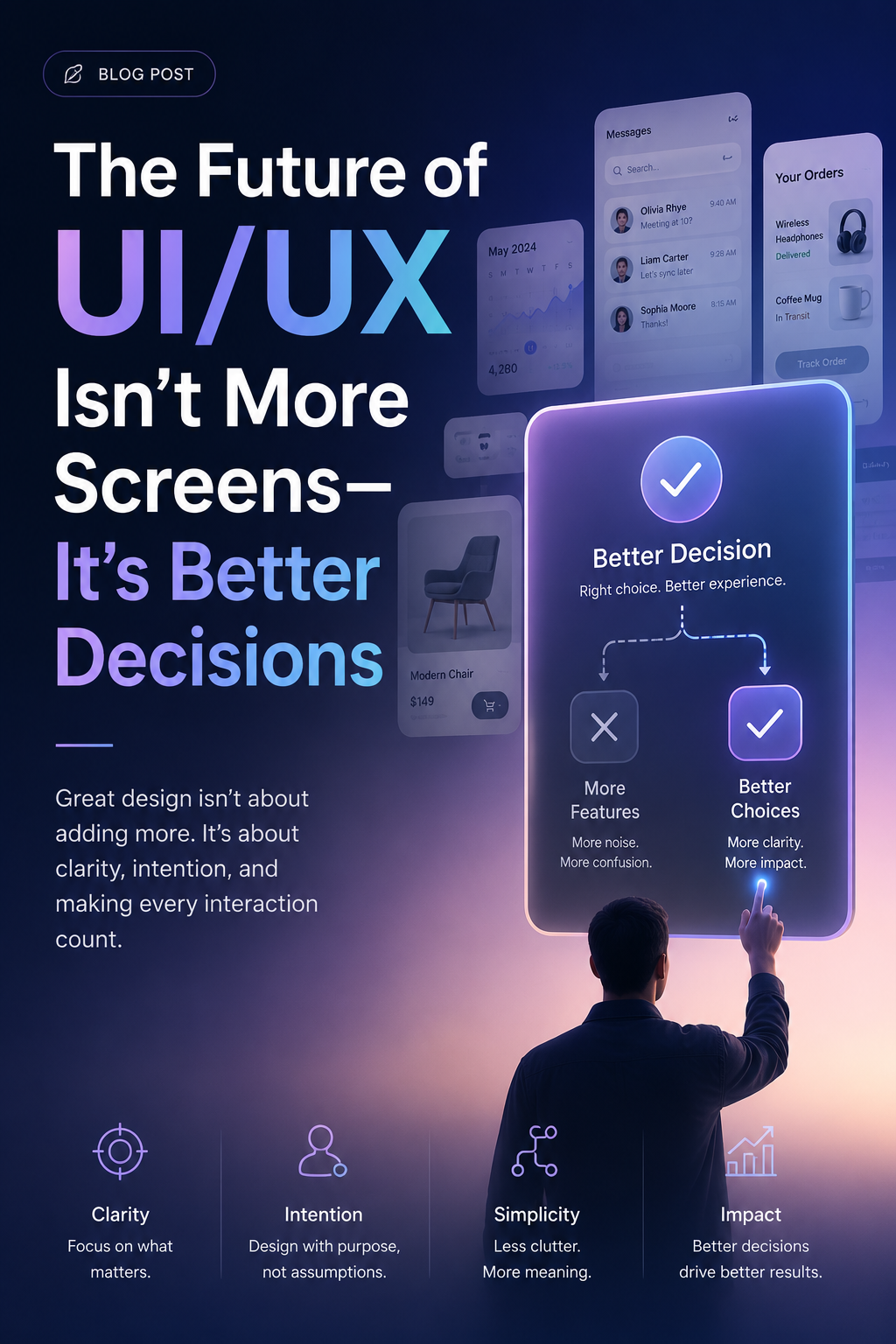
The next generation of digital products won’t necessarily have more features.
They’ll simply require less effort from users.
Interfaces will become:
- more contextual,
- more predictive,
- more conversational,
- and more adaptive.
The best design may eventually become almost invisible because users will spend less time figuring out software and more time accomplishing their goals.
Final Thoughts
The future of UI/UX isn’t about creating more beautiful screens.
It’s about reducing friction, building trust, and designing products that help people make better decisions.
As AI continues to reshape digital experiences, the designers who focus on clarity, transparency, and human-centered thinking will build products users return to—not because they’re visually impressive, but because they genuinely make life easier.