

Introduction
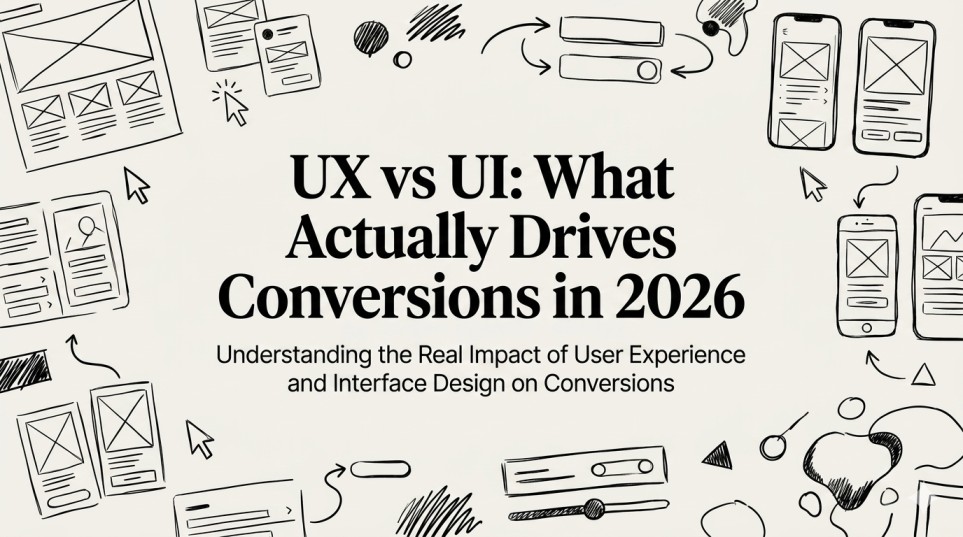
In 2026, digital success is no longer defined by just having a visually appealing website or a functional product. Businesses are now competing on experience-driven conversions, where every interaction influences whether a user stays, engages, or leaves. The long-standing debate between UX vs UI has evolved, but one critical question remains: what actually drives conversions today?
The answer is not as simple as choosing one over the other. While UI design captures attention, it is UX design that determines action. Understanding this distinction is essential for businesses aiming to improve conversion rates, user engagement, and retention in a highly competitive digital environment.
Understanding UX and UI in Modern Context
User Experience (UX) is no longer limited to usability. In 2026, UX represents the entire journey a user goes through, from the first interaction to the final conversion. It includes navigation flow, speed, personalization, accessibility, and emotional satisfaction. A well-designed UX ensures that users can achieve their goals effortlessly without confusion or friction.
On the other hand, User Interface (UI) focuses on the visual and interactive layer of a product. It includes typography, colors, layouts, buttons, and animations that shape how users perceive a brand. A strong UI creates a positive first impression, builds trust, and guides users visually through the experience.
While both are essential, their roles are fundamentally different. UX solves problems, whereas UI enhances perception.
Why UX Is the Real Driver of Conversions
When it comes to conversion optimization, UX plays the most critical role because it directly impacts how easily users can complete an action. A user may be attracted by a beautiful interface, but if the journey is confusing or slow, they will leave without converting.
Modern users expect frictionless experiences. If a website has complex navigation, slow loading times, or unnecessary steps in key processes like checkout or sign-up, conversion rates drop significantly. This is why businesses focusing on UX optimization, user journey mapping, and usability testing consistently outperform competitors.
In 2026, UX is also deeply connected to AI-driven personalization. Users expect platforms to understand their behavior and provide relevant suggestions instantly. This level of personalization significantly increases engagement and conversion rates, making UX the backbone of digital success.
The Role of UI in Influencing User Behavior
While UX drives the functionality of conversions, UI plays a powerful supporting role by influencing user perception and emotional response. A clean, modern interface builds credibility, while a cluttered or outdated design can create doubt, even if the product works perfectly.
UI is particularly important in the first few seconds of interaction, where users decide whether to stay or leave. Elements such as visual hierarchy, contrast, and call-to-action design help guide users toward desired actions.
In 2026, UI trends focus on minimalism, micro-interactions, and immersive design elements. These enhancements improve engagement and make interactions feel intuitive, ultimately supporting the overall conversion process.
UX vs UI: A Conversion-Focused Perspective
From a conversion standpoint, the difference between UX and UI becomes very clear. UX determines whether users can complete their journey efficiently, while UI determines how comfortable and engaging that journey feels.
A product with strong UX but average UI can still perform well because users can achieve their goals. However, a product with stunning UI but poor UX will struggle to convert because users encounter friction.
This is why businesses are increasingly investing in UX research, behavioral analytics, and conversion rate optimization (CRO). Data consistently shows that improving UX leads to significantly higher returns compared to visual enhancements alone.
Real-World Impact on Digital Products
In industries like e-commerce, SaaS, and mobile applications, the impact of UX is even more evident. Simplifying a checkout process, improving onboarding flows, or reducing loading times can dramatically increase conversions.
UI complements this by making the experience visually appealing and emotionally engaging. High-quality product visuals, intuitive dashboards, and well-designed interfaces enhance trust and encourage interaction.
However, the underlying driver remains UX. Without a seamless journey, even the best UI cannot compensate for poor usability.
The Future of UX and UI in 2026
The future of digital design is moving toward experience-first design strategies, where UX takes priority and UI adapts to support it. Technologies like AI, voice interfaces, and predictive design are reshaping how users interact with digital platforms.
UI is becoming more adaptive and personalized, while UX is becoming more intelligent and data-driven. This shift reinforces the idea that conversions are no longer just about aesthetics but about delivering the right experience at the right time.
Final Verdict: What Actually Drives Conversions?
If we isolate the impact, UX is the primary driver of conversions, while UI acts as an enhancer. UX ensures that users can complete actions without friction, while UI makes those actions visually appealing and engaging.
The most successful digital products in 2026 are those that combine both effectively. They prioritize usability, speed, and personalization, then layer it with a clean and modern interface.
Conclusion
In the evolving digital landscape, businesses that focus only on visual design are falling behind. True growth comes from understanding how users think, behave, and interact with products. This is where UX becomes the foundation of conversion success.
UI will always matter, but it cannot replace a poor user experience. To truly maximize conversions, brands must invest in UX strategy first, followed by UI enhancements that elevate the overall experience.
FAQs: UX vs UI and Conversions in 2026
What is the main difference between UX and UI?
The core difference lies in purpose. UX (User Experience) focuses on how a product works and how easily users can achieve their goals, while UI (User Interface) focuses on how the product looks and feels. UX is about usability, flow, and functionality, whereas UI is about visual design, layout, and interaction elements.
Which is more important for conversions: UX or UI?
When it comes to conversion rate optimization, UX is more important because it directly affects whether users can complete actions like signing up or making a purchase. UI supports this process by making the experience visually appealing, but without strong UX, conversions will drop regardless of design quality.
Can good UI compensate for poor UX?
No, good UI cannot fix poor UX. A visually attractive interface may grab attention initially, but if users face confusing navigation, slow performance, or complex processes, they are likely to leave without converting. Functionality always outweighs aesthetics in driving results.
How does UX improve conversion rates?
UX improves conversions by reducing friction in the user journey. This includes simplifying navigation, optimizing page speed, improving accessibility, and streamlining key actions like checkout or onboarding. A seamless experience increases user satisfaction, trust, and completion rates.
How does UI contribute to user engagement?
UI enhances engagement by creating a visually appealing and intuitive interface. Elements like clear call-to-action buttons, proper spacing, color contrast, and micro-interactions guide users and make interactions more enjoyable, encouraging them to stay longer and explore further.
What are the key UX trends impacting conversions in 2026?
In 2026, AI-driven personalization, predictive user journeys, voice interfaces, and mobile-first optimization are major UX trends. These innovations help deliver faster, more relevant, and highly tailored experiences, which significantly improve conversion rates.
What are the latest UI design trends in 2026?
UI trends in 2026 focus on minimalism, clean layouts, immersive visuals, and subtle animations. Designers are prioritizing clarity and simplicity, ensuring that visual elements support usability rather than distract users.
Why do users leave a website despite good design?
Users often leave due to poor UX issues such as slow loading speed, confusing navigation, too many steps in a process, or lack of trust signals. Even if the UI looks good, these underlying problems can lead to high bounce rates and low conversions.
How can businesses balance UX and UI effectively?
Businesses should start by focusing on UX strategy, including user research and journey mapping. Once the experience is optimized, they can enhance it with strong UI design that improves visual appeal and interaction. The key is to ensure that UI always supports UX, not overrides it.
Is UX design more expensive than UI design?
UX design can require more investment because it involves research, testing, and continuous optimization. However, it delivers higher ROI by improving conversions and reducing churn. UI design is equally important but typically focuses more on the visual layer rather than the underlying experience.
How does mobile UX impact conversions in 2026?
With the majority of users on mobile devices, mobile UX is critical for conversions. Fast-loading pages, responsive layouts, and easy navigation are essential. Poor mobile experiences often result in immediate drop-offs and lost revenue opportunities.