

A visually appealing interface may attract users, but it does not necessarily make a digital product successful. Users expect products to understand their goals, simplify complicated tasks, and deliver consistent experiences across different touchpoints.
This is why product experience design is becoming increasingly important in 2026. The focus is shifting from designing individual screens to shaping the complete experience users have with a product.
What Is Product Experience Design?
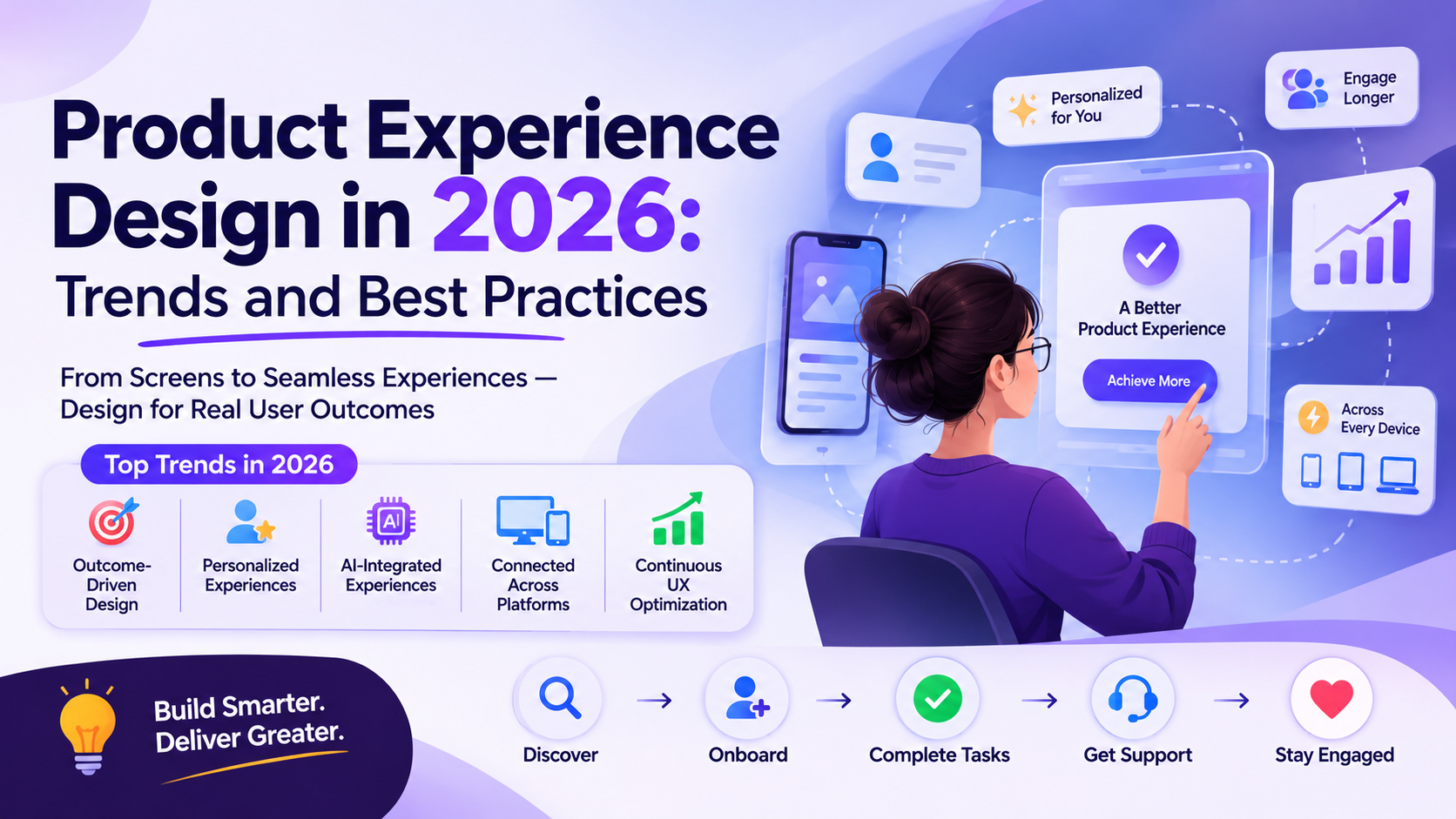
Product experience design considers every interaction a person has with a digital product, from discovering and onboarding to using features, receiving support, and returning to complete tasks.
Unlike traditional screen-focused UI design, it connects user research, UX strategy, interface design, product functionality, and business goals.
5 Product Experience Design Trends in 2026
1. Outcome-Driven Product Design
Instead of measuring design success by the number of screens delivered, teams are focusing on user outcomes such as successful onboarding, task completion, and feature adoption.
2. Personalized Product Experiences
Products are increasingly adapting dashboards, recommendations, and workflows based on user preferences, behavior, and roles.
3. AI-Integrated Experiences
AI-powered search, intelligent recommendations, and contextual assistants are becoming part of product interfaces. The challenge is making these features genuinely useful without adding unnecessary complexity.
4. Connected Experiences Across Platforms
Users expect continuity when moving between websites, mobile apps, tablets, and desktop platforms. Consistent design systems and shared interaction patterns help deliver that experience.
5. Continuous UX Optimization
Product design is becoming an ongoing process. Analytics, usability testing, customer feedback, and experimentation help teams identify friction and improve experiences after launch.
How Businesses Can Build Better Product Experiences
- Understand user needs before defining features.
- Map complete user journeys.
- Prioritize usability over unnecessary visual complexity.
- Build scalable design systems.
- Test prototypes before development.
- Measure product adoption and user satisfaction.
Product design and engineering partners such as GeekyAnts work across these disciplines, highlighting the importance of connecting UX decisions with the actual product implementation.
Final Thoughts
Product experience design is about making digital products useful, understandable, and consistent throughout the customer journey. In 2026, businesses that connect design strategy with product outcomes can build experiences that encourage adoption and long-term engagement.