

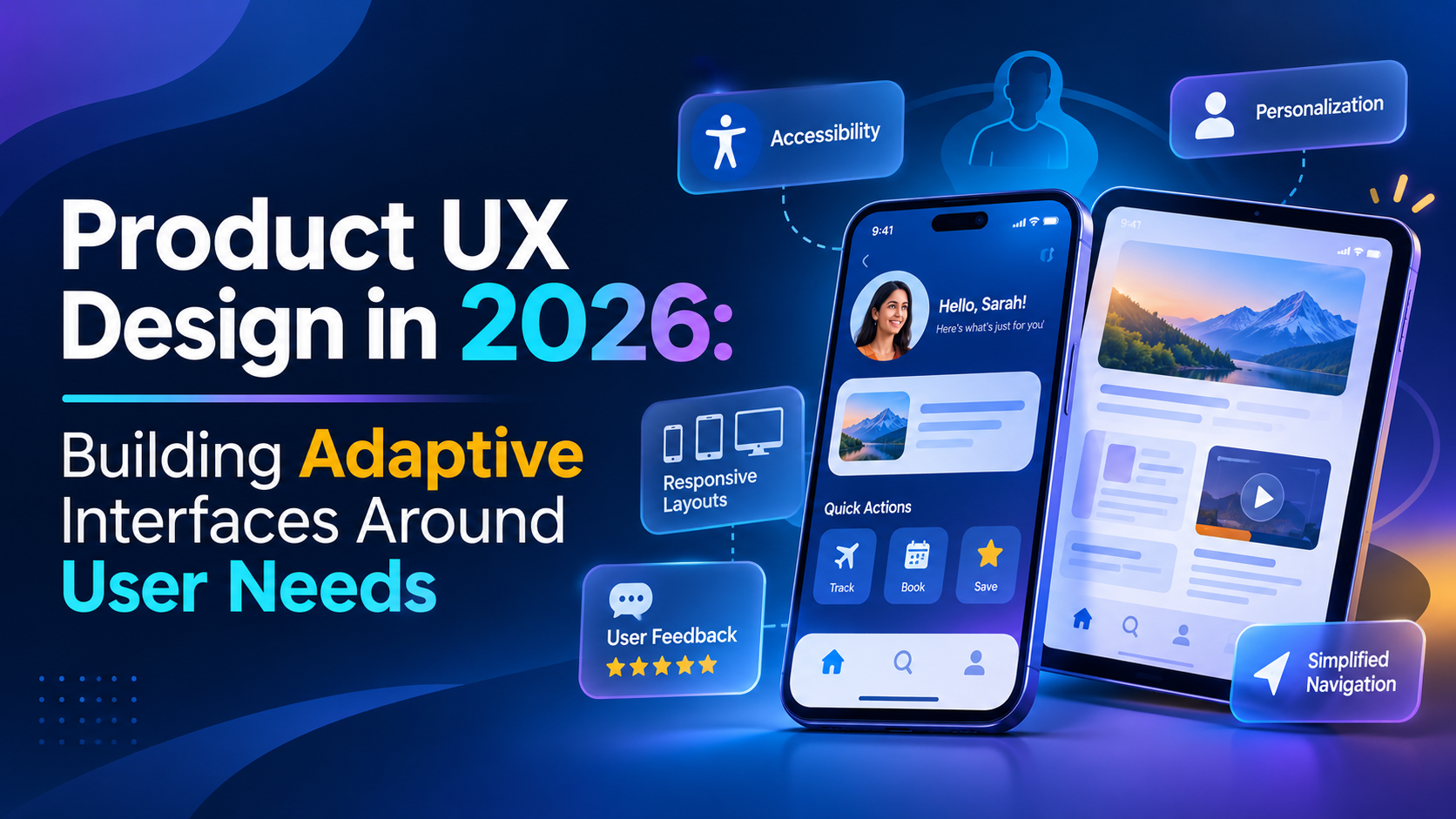
Product design is moving beyond attractive screens and intuitive navigation. In 2026, successful digital products are increasingly expected to understand user needs, adapt to different workflows, and provide more personalized experiences.
This shift is making product UX a strategic part of product development rather than simply a visual design activity.
What Is Changing in Product UX?
Modern product experiences are becoming more adaptive, connected, and intelligent. Here are five trends influencing product UX in 2026.
1. Adaptive User Interfaces
Instead of presenting the same interface to everyone, products can adapt content, recommendations, and workflows based on user roles, preferences, and behavior.
For example, a project management product may show different dashboards to developers, project managers, and business leaders.
2. AI-Powered Product Experiences
AI is becoming part of the product experience itself. Natural-language search, intelligent recommendations, automated assistance, and contextual suggestions can help users complete tasks with fewer steps.
However, AI features should solve real user problems rather than exist simply to follow a trend.
3. Design Systems That Support Product Growth
As products expand, maintaining consistency becomes challenging. Scalable design systems help teams manage reusable components, design tokens, accessibility rules, and interaction patterns across multiple platforms.
4. Personalized Onboarding
Traditional onboarding often gives every user the same walkthrough. Product teams are increasingly exploring contextual onboarding that adapts to user goals, experience levels, and selected features.
5. Design and Engineering Collaboration
The gap between design and development continues to shrink. Interactive prototypes, reusable components, and AI-assisted design workflows allow teams to validate product experiences earlier and reduce unnecessary handoff issues.
How Businesses Can Improve Product UX
- Study real user behavior before introducing new features.
- Identify friction in important product journeys.
- Use personalization where it improves task completion.
- Maintain a consistent design system.
- Test new experiences with actual users.
- Measure usability, retention, and task completion.
Product engineering companies such as GeekyAnts work across design and development, making collaboration between product thinking, UX, and engineering an important consideration when building digital products.
Final Thoughts
Product UX in 2026 is about creating experiences that respond to users rather than forcing users to adapt to complicated products. Adaptive interfaces, useful AI features, scalable design systems, and continuous testing can help businesses build products that remain useful as customer needs evolve.