

Why Your SaaS Platform Is Quietly Losing Users ,And What Design Has to Do With It
Most SaaS companies don’t lose users because their product stops working. They lose them because the product becomes work. A clunky onboarding screen, a dashboard that buries the one feature a user needs every day, a mobile view that was clearly designed as an afterthought ,these are the moments that quietly accelerate churn. And for B2B SaaS teams in North America managing quarterly targets, the connection between poor UX and missed revenue numbers is no longer theoretical.
The Real Cost of a Bad Interface
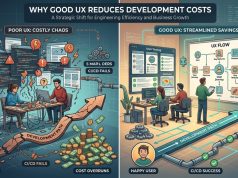
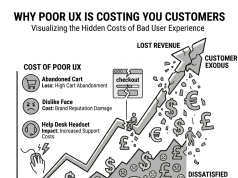
A 5% increase in customer retention rates can boost profits by 25–95%. That’s a long-cited benchmark, but what’s newer ,and more pointed ,is what’s driving the churn in the first place. Most SaaS churn stems from poor experience design, not poor pricing. The quiet killer is preventable friction: confusing onboarding, vague calls to action, and workflows that make users put in too much effort.
Product teams often chase this problem with discounts or customer success calls. Both help ,briefly. But customers don’t churn because they don’t care; they churn because it’s too hard to care. That distinction matters when companies are deciding where to allocate roadmap resources for the next two quarters.
Investing in user experience design can yield a return on investment of up to 9,900% for a SaaS company. That figure comes with caveats about methodology and scope, but even a fraction of it changes the conversation inside a finance review. UX stops being a design department concern and starts being a CFO conversation.
Where SaaS Products Actually Break Down
The failure points most North American SaaS teams encounter aren’t exotic. They’re predictable, which makes them fixable ,but only if the team treats them as design problems rather than support ticket noise.
The first failure point is onboarding. Poorly designed SaaS UX often leads to 50% abandonment in onboarding alone. A new user who doesn’t find value in the first session rarely comes back to look for it. The second is information density. SaaS products often pack features, but overwhelming users leads to 88% abandonment. Teams building complex platforms tend to equate feature richness with value, when users experience it as noise.
The third, and increasingly urgent, failure point is mobile. Mobile-first design matters because mobile traffic accounts for 60% of SaaS usage. Most B2B SaaS platforms were built desktop-first and mobile-adapted. That order of operations shows ,in truncated nav menus, tap targets that require a stylus, and dashboards that were never truly designed for a 6-inch screen.
Performance compounds all of it. When a mobile site takes more than three seconds to load, over half of users leave. Today, that threshold is no longer an optimization target ,it’s the minimum standard users expect.
The Practices That Actually Move the Needle
The SaaS platforms that hold retention ,Slack, HubSpot, Figma ,don’t succeed because they have more features. They succeed because users can accomplish something meaningful within the first few minutes, and keep doing so without friction accumulating over time. The design disciplines behind that outcome are consistent.
Here are the foundational practices product teams in the US and Canada are actively implementing:
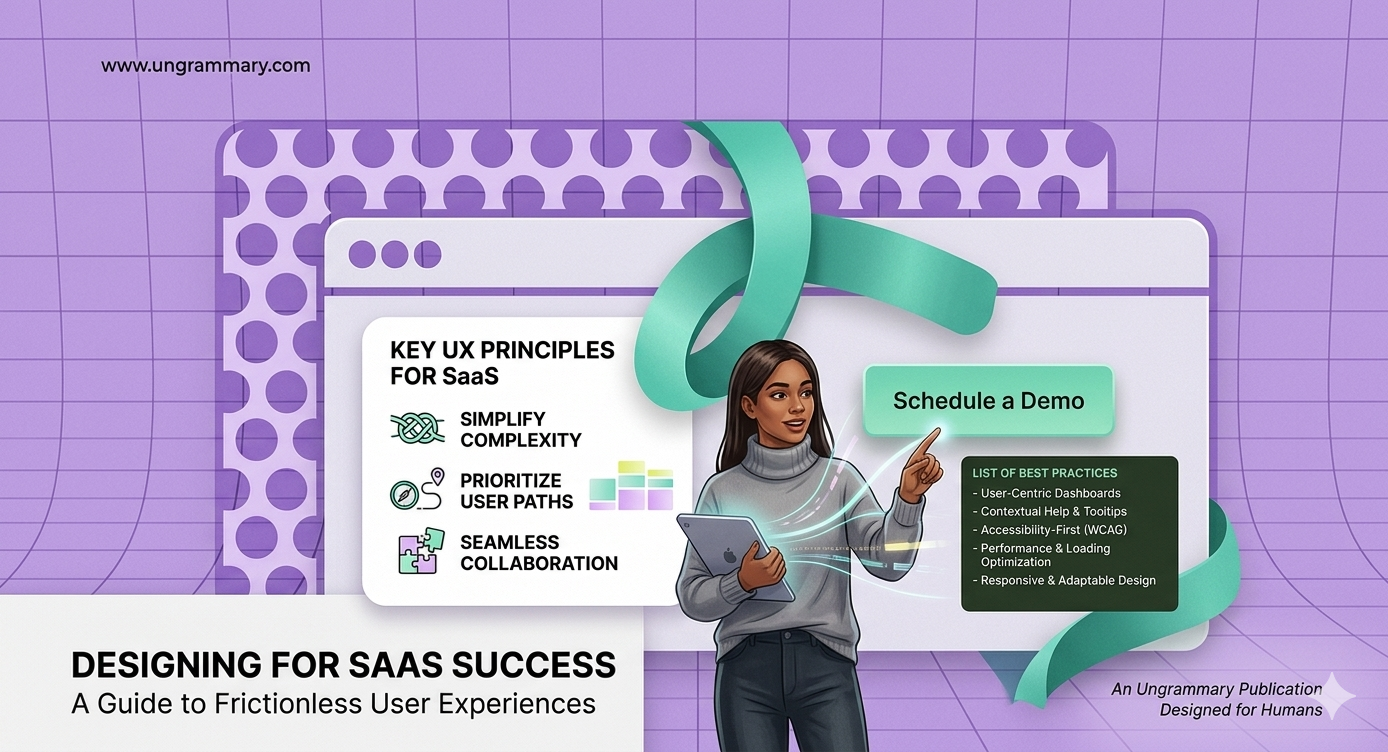
- Progressive disclosure over feature dumping. Show users what they need for their current task, and surface advanced functionality only when the context calls for it. Layering features ,presenting core tools prominently while tucking less-used functions into sub-menus or collapsible sections ,directly reduces cognitive overload. Jacob Nielsen’s concept of progressive disclosure, developed at Nielsen Norman Group, remains the clearest framework for this.
- Onboarding tied to outcomes, not tutorials. Onboarding checklists remove the guesswork from getting started. Users don’t guess what to do next ,they follow clear, step-by-step actions. As they complete each task, they see progress, which builds momentum and reduces drop-off. The best onboarding flows link each step directly to an in-app action, not to a video or a help article.
Beyond these two, the practices that show up consistently in high-retention SaaS products include: continuous accessibility compliance against WCAG standards, AI-driven personalization of dashboards and workflows, and omnichannel consistency ,ensuring the experience doesn’t fracture when a user moves between browser, mobile app, and email notifications.
Tracking user activation rates, feature adoption, and time-to-value gives teams the data to identify where design improvements are actually needed. The teams that iterate fastest on UX are rarely the ones with the biggest design budgets ,they’re the ones measuring the right things.
Who’s Getting This Right
Several design and product agencies have built reputations specifically around SaaS UX work, and their approaches reflect the practices above in applied form.
GeekyAnts, based in India with a significant North American client roster, has logged over 550 client engagements across SaaS, fintech, and healthcare platforms. GeekyAnts works with SaaS products and cross-platform systems, combining UX design with a technical background that accounts for how products are built ,not just how they look. Their system thinking helps keep user flows simple and predictable across desktop and mobile. A recent Clutch review from a CTO at an AI video analytics firm noted that the team simplified user journeys, reduced friction in critical tasks, and enabled positive user and stakeholder feedback.
Clay has built a reputation for minimal, developer-friendly SaaS interfaces ,well regarded for analytics-heavy products where clarity and usability carry the most weight. Momentum Design Lab focuses on enterprise SaaS, particularly data-heavy dashboards and multi-role workflows. ProCreator, recognized as a Clutch Global Leader in 2024, brings strong execution for SaaS platforms where conversion and retention need to move together. Brights emphasizes a five-stage design workflow ,discovery, definition, prototyping, UI design, and validation ,that maps closely to how agile product teams actually operate.
Rounding out the broader field: Webstacks (strong in SaaS marketing-to-product UX continuity), Codewave (design-thinking-led, with a focus on transformation rather than cosmetic redesign), Linkup ST (multiple international design awards, known for complex product systems), Goji Labs (early-stage and scaling SaaS, with a focus on launch-ready product design), and Emerge Digital (performance-first UX with particular attention to load-time optimization and WCAG compliance).
The agencies doing the most credible work share a common thread: they measure outcomes, not deliverables.
Where This Is All Heading
In the SaaS ecosystem, user expectations evolve faster than software updates. AI is no longer hype ,it’s essential infrastructure, powering predictive interfaces that adapt in real time, with 68% of users now favoring personalized interactions.
The next inflection point for SaaS UX isn’t aesthetic. It’s architectural. Platforms that embed AI not just into features but into the interface layer itself ,dynamically adjusting information density, surfacing the right tool at the right moment, predicting the next action before the user decides ,will compress time-to-value in ways that static design patterns can’t match.
For product leaders and founders in North America, the operational implication is straightforward: UX is no longer a phase in the product cycle. It’s a continuous function, closer in practice to revenue operations than to visual design. The companies that treat it that way ,that staff for it, measure it, and resource it accordingly ,are the ones whose retention curves will look different in 18 months.
The interface is the product. And the product is the business case.